
shoe fittings
Have I mentioned yet in my previous life I helped to open a running store?

Logo of the running store*
I’ve determined how we are afforded at least double the amount of lives cats get and that I better begin using them wisely now that I’m approximately halfway through the supply. Maybe some of them can be considered simultaneous lives though? Kind of similar to working in two alternate dimensions but really it’s just a multitude of jobs squeezed into one year of regular life. You can do that when you’re young and don’t really need sleep, I guess. That’s what I consider my life within a running store to be.
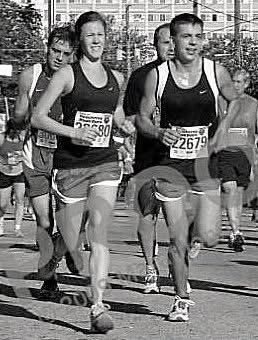
LK running the Peachtree Road Race in 2009.
Anyhoo, wild but true—I helped open a running store called Uphill Running in Issaquah, WA. I learned a few skills like fitting feet for shoes due to that experience and now I wish to share that skill with you. Also, running shoe company representatives gifted me many shoes to test, which means I’ll share my faves with you and why I particularly approve of them.
What prompted my memory? Oddly, observing my student fail to correct an alignment issue I’ve repeatedly addressed. A specific correction I received as a young dancer. When I began serious training, especially serious jumping, I became prone to shin splints and one of my teacher’s informed me the reason why involved over pronation. Not her terms but I’ve since learned some kinesiology and will spare you the confusing ballet lingo + description that you wouldn’t be able to visualize. The term in either vernacular equates to rolling in on the arch of your foot.
Ever since that day and aha moment, my shins remain splint free. The simple act of lifting my arch and retraining muscles to support correct placement healed and further prevented any injuries. Now, I obviously always share the information with my students and advocate for them to work hard towards proper alignment. What does that mean for you? And what does that have to do with shoes?
Another common cause for shin splints is running in shoes that are too small for your feet. Women tend to suffer this fate a little more often since there are societal expectations for females to have “dainty” or “small” feet. Well, I’m here to help get you in the right shoe for you and squash any care about what others think of your shoe size.
Protecting your bones, ligaments, and alignment matters more than any arbitrary number. Let’s get you to a store where a staff member will use a tool to measure your feet, possibly analyze your gait, and take the time to properly help you try and test shoes. The following is my list of what to look for when at the store.
1. brannock device
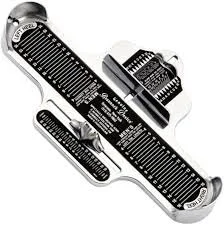
Brannock device for measuring foot length and width
I’m a bit bias but a shoe store that specializes in running will train their employees to use a tool called a Brannock device to measure your feet length and width to find the best fit for your foot. Not only will they measure each of your feet while you’re sitting, they will measure them while standing. Why?
Your arch stretches to support your stance and the amount that it stretches can be measured to determine whether you need arch support or a higher profile shoe or a larger width to accommodate that movement. This action is also a preview of the rolling motion your foot makes while running. So, if you discover your feet need more support, then specific shoes and/or inserts can help and the expertise of the employees can assist this aspect as well.
*Also worth noting: sizes vary across brands and styles of shoes, which are updated often. Measuring your foot every time you purchase a new pair of shoes is a wise strategy to continually be matched with a best fit.
2. Gait Analysis
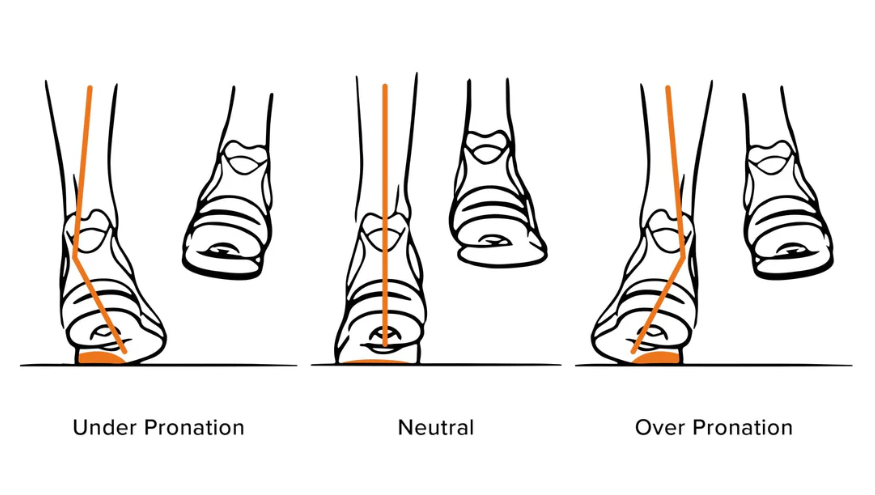
What is Gait Analysis? by Up & Running thoroughly explains everything related to gait analysis so check it out.
The fitting may go a step further than measuring the interchange of your arch from sitting to standing by watching you walk barefoot. However, gait analysis may not be an option. If it is, take advantage of the expertise! If not, don’t sweat the moment. You can figure this out yourself through a simple exercise.
Stand on one foot in front of a mirror and bend your knee. Does your knee fall inward toward your other leg or track over your middle toe? Make note and try again on the other side. If you found your knees rotating inwards this could mean a few things; however, most likely you need support until you strengthen your stabilizing muscles.
In addition, you could paint each foot and press them onto paper to discover your arch height. Your arch height may help you determine whether extra support is needed or not out of a shoe you try on. Again, a running shoe employee can easily discuss this with you.
3. fit, test run, & Compare
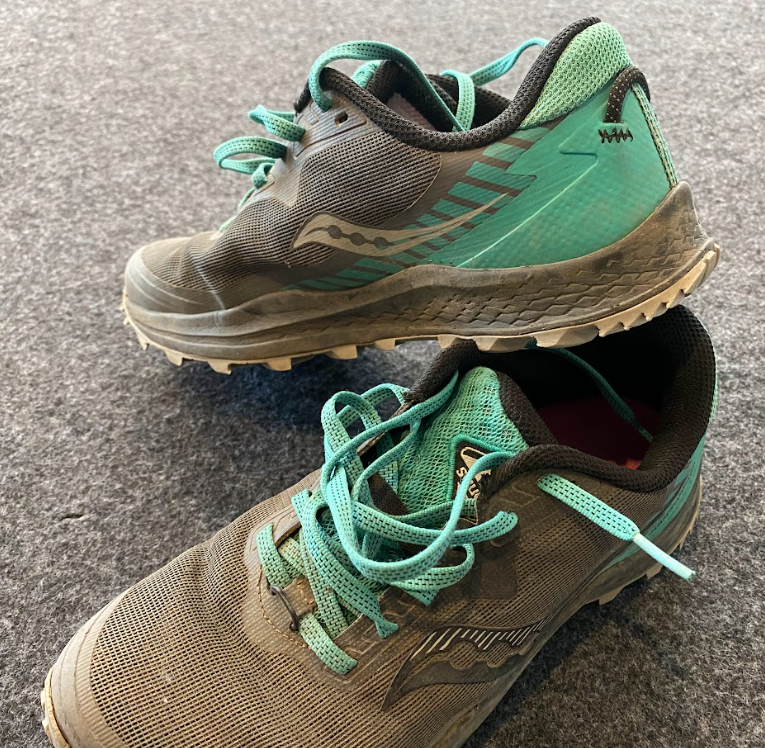
What shoes does Sprite prefer?
These well loved Kinvara Trail runners by Saucony prove that point.
Continuing the fitting process, it’s time to try on shoes! The fun part. The employee will bring out two to three pairs of shoes for you to strap in and test out. Consider this an opportunity to ask about different ways to lace up for differently shaped feet, such as narrow heels or a pronounced bone on the top of your foot. By testing the shoe, I mean truly test it.
The store will happily allow you to run across the parking lot and back. They honestly want you in the best shoe possible for your feet, running stance, and running (or walking!) goals. Then, you get to compare shoes by wearing one of each brand. Repeat this process as much as needed and fully describe what you are experiencing to the fitter.
Be honest with yourself. DO NOT CHOOSE THE SHOE THAT LOOKS THE BEST. Choose the shoe that truly feels the best fit on your feet, especially during that lap around the building. Enjoy the process!
4. keep records
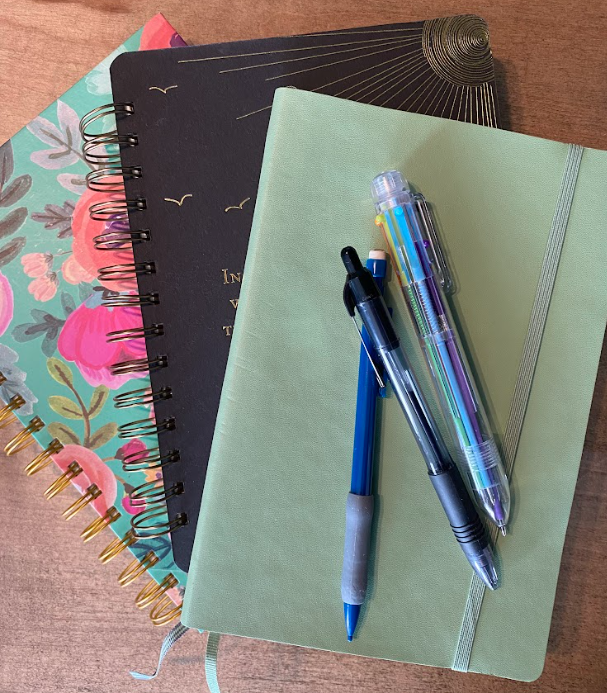
After you’ve made your purchase and are running/walking on a regular basis, keep a journal about how the shoes feel during your runs. Highlight anything that stands out like knee, ankle, hip pain or whether your heels scrape the inside of your other lower leg as you run.
You may also want to track distances so you get a better idea of how often you need to replace your shoes. Any records you keep will help you determine a better fit each successive time you return to purchase another pair.
Ok, all of that info may have felt like a lot so let’s review:
If you want higher quality assistance in being fit for shoe size/make/model, then stop by your local running shoe shop. Don’t be intimidated!
Ask for your feet to be measured and whether gait analysis is offered.
Put the shoes you try on to the test in the same way you would at home.
Select the pair of shoes that truly fits your feet, not what looks the best or is the least/most expensive. A quick note about pricing: Generally, specialty running shoe stores are more expensive than big box sports stores. The reason being running stores offer not only the newest models of shoes, which offers the most recent innovations for runners feet specifically, but also higher quality models of shoes.
Ask questions throughout the experience and learn more about yourself. Keep track of what does and doesn’t work over time along with tracking your mileage.
Overall, I hope the process is fun and lighthearted for you. No need to stress about the decision since you can always swap out the pair for a different brand or style. While on the thought of brands, I mentioned sharing a few of my faves with you so let’s address that briefly. I adore Saucony. It’s the brand that fits my foot best and the density of the foam for the foot bed always seems to be Goldilocks perfect for me whether it’s a road or a trail shoe.
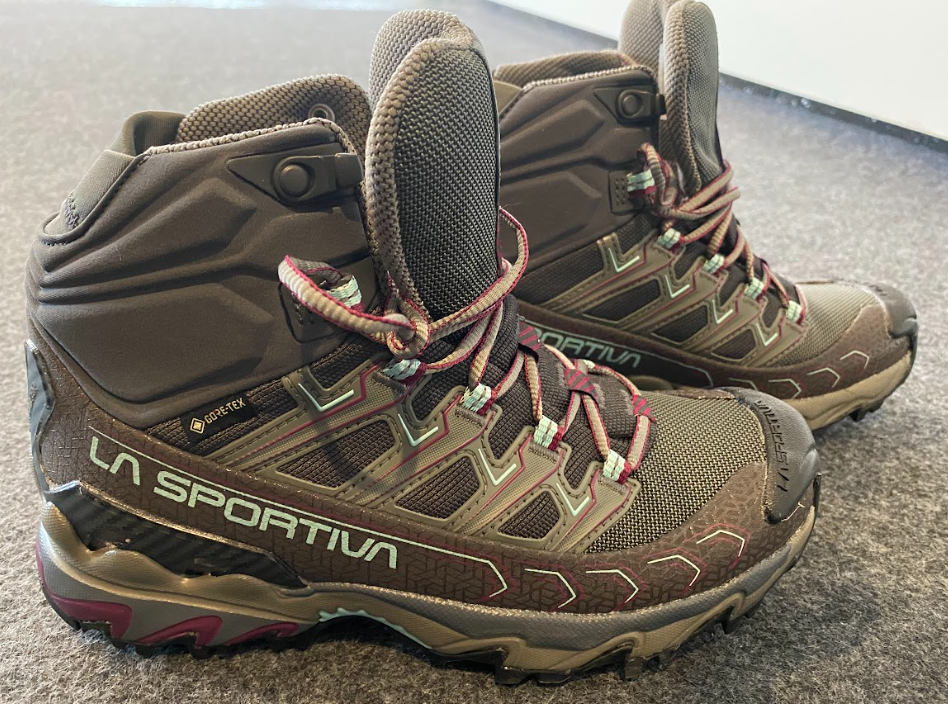
That stated, I will try any brand. Other solid options for me over the years include New Balance and Topo. Meanwhile, my go-to hiking boot brand is La Sportiva but they run narrow so I wear a size larger than my standard. You’re curious about what I haven’t liked, aren’t you? I feel you squinting at me. Since I don’t want to sway you one way or the other, please come back and ask me after your fitting. I’ll share with you then. I promise. Otherwise, what shoes work for you so far and why?
*The Uphill Running website strangely still exists. I scavenger hunt dare you to find the photo of Holly dog on the Group Run page and let me know what you think her expression means. ;-)